


|
Question from Joan Martin
UU Church of Bowling Green
Diana, my burning question is: should all small groups in the SGM program of a congregation focus on the same theme--like Bob Hill recommends? Or, should each group select its own topic? For the past three years, we have used the themes "7 Principles," Spirit of Life, and "The Rituals of our Lives" for all groups.
And one answer from your Editor:
I'll give you my answer and then include your question in CG News. It came up at the GA workshop this year. So it's a good question and one that many people are asking. The answer is: Churches do it many different ways and all of them seem to work. There is an advantage to having a common topic and even more value in having it connected to a Sunday sermon. However, it's also true that different groups are in different places and the leaders know better than anyone what type of topic should come next. The leaders in my church program all pick their own sessions from the set of sessions in their Leaders Guide or from the UU SGM Network site. But I write or find and recommend two or three sessions a year that are related to a Sunday service. We haven't developed any expertise in session writing and are happy to take advantage of the fine work others have done. This has worked for our 18 continuing groups. Some ministers write all of the sessions for their church's program. I think that's great and a real gift, but other ways can work too.

Small Group Ministry and Growth
The First in a Series of Articles
Diana Dorroh
You may remember the early promises that Small Group Ministry would make our UU churches grow rapidly. It certainly works for the meta-churches (change churches). These churches use "side door entry" to get neighbors and friends into small groups and then into church membership. They also often pitch their Sunday morning service to newcomers. It can be quite systematic and produces large numbers.
UU churches with Small Group Ministry programs have experienced somewhat different patterns of growth than these meta-churches. I'm interested in collecting stories about those patterns.
Here's the story from my church. We implemented Small Group Ministry at the Unitarian Church of Baton Rouge ten years ago. Our minister, Rev. Steve Crump, invited every new member to join a group and within five years, we had more than half of our membership in Small Group Ministry. Our church membership was 300 ten years ago and is 390 now; so, over the ten years, we have grown by 30%. However, in the first six years of that decade, our growth was about 2% a year. Then, it accelerated to about 5% and now a surge of visitors and new members has resulted in 10% growth this year.
I am aware of two systems that are used in UU circles to analyze church growth. Over the course of the next few months, let's try to understand these two systems and then determine how Small Group Ministry can be used most effectively to produce church growth.
One well known system is the four kinds of growth identified by Loren Mead in "More than Numbers: the Ways Churches Grow "-- numerical, organizational, maturational, and incarnational. http://www.uua.org/documents/congservices/conggrowth.pdf.
Another system of three metrics that can be used to analyze church growth and help churches decide where to put emphasis is described in "Congregations Count," http://www.uua.org/documents/laskowskilinda/congregationscount_070519.pdf, by Linda Laskowaski, UU Church of Berkley. The metrics have been used as the basis for membership workshops offered by the UUA. These three metrics are described below:
(1) The Visitor to Member Ratio is the ratio of the number of first time visitors for a year to the number of members. In growing churches, it is 1:1.
(2) The Conversion Rate is the number of new members divided by the number of first time visitors over a period of at least a year. 20% is a very good rate for a UU congregation. 14 - 20% is the expected range.
(3) The Loss Rate is the percentage of members that leave a congregation during one year. We're told to expect 10-12% loss, with half from moves or death.
An example: A church of 100 members has had 100 new visitors over the last year. 15% of those 100 visitors became members. The Loss Rate was 12%, as 12 members left the church. The net growth was 3 or 3%.
As an exercise, you might try applying these three metrics to your own church's data. Let us know what you find.
Over the next few months, we'll be discussing these two systems and producing answers to the questions: What do they tell us about the growth patterns we've seen in UU churches? What does this experience and our understanding of the systems tell us about how Small Group Ministry can be used to enhance church growth?
I'll get it started with a series of articles. This is the first one. But I'll need your help to make this endeavor meaningful and relevant. My questions for today are:
What's your growth story? Have you experienced growth after implementing Small Group Ministry? How much? Was that growth steady or did it accelerate, decline, or peak? When did you start Small Group Ministry? What percentage of your congregation participates in Small Group Ministry?
Questions of the Month
Question One: (Repeated from the Growth Article above) What's your growth story? Have you experienced growth after implementing Small Group Ministry? How much? Was that growth steady or did it accelerate, decline, or peak? When did you start Small Group Ministry? What percentage of your congregation participates in Small Group Ministry?
Question Two: (Repeat) Are you planning to start a new program soon or restart an exisiting program? Why did your church decide to do it now and what issues and problems are you facing?
Question Three: How do you select sessions for your group? How does it work?
Share your insights, strategies and experiences.
Send your answers to Diana at diana_dorroh@hotmail.com.
We'll print them in the next CGNews.
Full Circle
Share your small group ministry experiences with others.
Last month's questions:
Question One: What is most fulfilling to you about facilitating your group?
Question Two: How has your small group made you a better UU?
Answers: None this month. I hope to publish some answers to Question One in the September issue.
News & Events
We plan to have the 2010 UU Small Group Ministry Institute in Southern California during the week before Labor Day.
Publications
The SGM Quarterly journal is distributed to members of the UU Small Group Ministry Network four times a year. Issues are added to the web site after the subsequent issue has been sent to members. The SGM Quarterly features articles by ministers, program leaders, facilitators, and group members, as well as tips and other resources on Unitarian Universalist small group ministry and covenant groups. Join the Network to subscribe. Download a membership form from www.smallgroupministry.net.
NEW: Ten Years of UU Small Group Ministry, UU SGM Network, June 2009
This anniversary collection traces the rationale, vision, and magic of the spiritual
revolution and presents the rich history of the small group ministry movement in classic
articles and conference proceedings from its earliest proponents.
Network Members: $20 + $5 shipping Non-members: $30 + $5 shipping
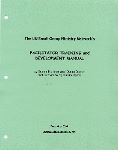
Facilitator Training and Development Manual,
UU SGM Network, December 2008
The guide to implementing in-house training programs. Covers facilitator selection, initial training, and on-going facilitator support. Includes the Facilitator's Guide to customize for your program, use in training sessions and distribute to all group leaders.
Network Members: $15 + $5 shipping Non-member: $25 + $5 shipping
Unitarian Universalist Small Group Ministry,
UU SGM Network, June 2008
A compilation of more than fifty articles from five years of the Network’s website and newsletters. Covers basic elements of SGM, program structure and promotion, the minister’s role, facilitation, group development, session plans, and the application of SGM principles in multiple aspects of congregational life.
Network Members: $15 + $5 shipping Non-member: $25 + $5 shipping
To order: http://www.smallgroupministry.net/forsale.html.
HEART TO HEART: Fourteen Gatherings for Reflection and Sharing, April 2009 by Christine Robinson, senior minister of First Unitarian Church of Albuquerque, NM, and Alicia Hawkins, SGM program director at First Unitarian Church of Albuquerque.
Resources for fourteen group conversations on topics such as forgiveness, loss, nature, money, and friendship. Offers readings, journaling suggestions, and thought-provoking exercises to help participants prepare for the spiritual practice of sharing in community.
From Skinner House Books, UUA Bookstore, www.uuabookstore.org, April, 2009, $14
Who We Are
The UU Small Group Ministry Network is a grassroots organization of Unitarian Universalist congregations, ministers, small group ministry/covenant group leaders and participants.
Our mission is to help create healthy Unitarian Universalist congregations and a vital Unitarian Universalist movement by promoting and supporting Small Group Ministry.
The purpose of the Network is "to support small group ministry and related shared ministry models in Unitarian Universalist congregations through developing new resources, networking, and training opportunities."
In addition to the SGM Quarterly journal for members and the free, online Covenant Group News, we publish new resources for program coordinators and facilitators, sponsor a consultation booth and SGM workshops at General Assembly, offer a week-long SGM Summer Institute, help local leaders plan regional SGM conferences, and give workshops in congregations and districts across the nation.
The UU SGM Network is a 501(c)(3) charitable organization supported solely by congregational and individual memberships, donations and publication sales revenue. Network Board members donate their time and personal resources to spread the good news of small group ministry.
|